

One real finding, step by step
In one real study, AI named a specialist far less often than a much larger incumbent, but listed it first in almost as many answers. The figures are what the study measured. The buyer question and the AI answer shown are illustrations. Firms are anonymized and figures rounded.
We design questions like this one to represent a buying situation.
We design each study's questions around the buying decisions relevant to the market we're examining. The question below illustrates the kind we use; it is not a verbatim question from the study. The study included a large, well-known incumbent and a smaller specialist.
“Which firms should I consider for a specialized strategy for my high-net-worth clients?”
The finding in step 3 comes from all of the study's questions, not this one.
Study scale
- Designed questions
- At least 200
- AI and search systems
- 8
- Answers
- At least 1,600
Every answer is stored and checked.
This is what one answer looks like.
We save every answer exactly as the AI gave it: which firms it named, in what order, and which web pages it cited as sources.
- Specialist firm
- Firm C
- Incumbent
- Firm D
Sources the answer cited
- ◆ Specialist's strategy guide
- ○ Industry trade publication
- ○ Advisor forum thread
- ◆ Specialist's methodology page
- ○ Comparison article
What all the answers showed
One answer doesn't tell you much, so we look at all of them. First place can only be counted where an answer lists firms in order. Five of the study's eight systems do that: ChatGPT, ChatGPT with search, Claude, Gemini and Perplexity. In those answers, AI named the incumbent about two and a half times as often as the specialist.
But it listed the specialist first in about seven of every ten answers that named it, and the incumbent first in about three of every ten that named the incumbent. The incumbent was far ahead on mentions, but nearly level with the specialist on first places.
- Specialist firmfewer mentionsFirst, about 70%2nd to 3rd
- Incumbentabout 2.5 times the mentionsFirst, about 30%2nd to 3rd, about 40%Lower
- For the specialist
- Where is it missing from AI recommendations, and which of those buyer situations are worth pursuing?
- For the incumbent
- Where is it being named but not ranked first, and which of those buyer situations matter most?
Citesmith study, 2026. Ranked answers from five AI systems, rounded to the nearest 10%. Firms anonymized.
Limits of the finding
The study can show the pattern across the stored answers. It cannot show whether a buyer acted on an answer or prove that one change will cause a particular result.
What the evidence shows
- Where AI ranked each firm, across many answers and five AI tools.
- Which web pages the answers cited, and who published them.
- That the pattern shows up across AI tools, not just in one answer.
What it does not show
- How any AI model works internally.
- Whether a buyer acted on an answer.
- That any one change will cause a particular result. We track what moves after you act.
A finding like this is where our evaluation starts.
The finding points to an opportunity for the specialist: when AI names the specialist, it usually lists it first, so being named in more answers could be valuable. For a client, we work through three questions before we recommend acting on an opportunity like this.
- Is it worth winning? We identify the buyer situations where the firm is absent from AI answers, then assess which are worth pursuing against the client's commercial priorities.
- What might explain the result? We investigate four possibilities: gaps in the firm's own public information, missing coverage in independent sources AI cites, differences between the firm's positioning and the way AI describes it, and genuine differences between competitors' offerings. These clues help us develop a diagnosis, but they don't establish why AI recommended one firm over another.
- What is the verdict? Act, when improving positioning or supporting evidence is worth pursuing. Product gap, when a competitor offers a relevant capability the firm lacks. Leave alone, when the buyer situation isn't commercially important or the firm isn't a strong fit.
The specialist was not our client and we did not study its goals, so this page stops at the opportunity. Firms anonymized.
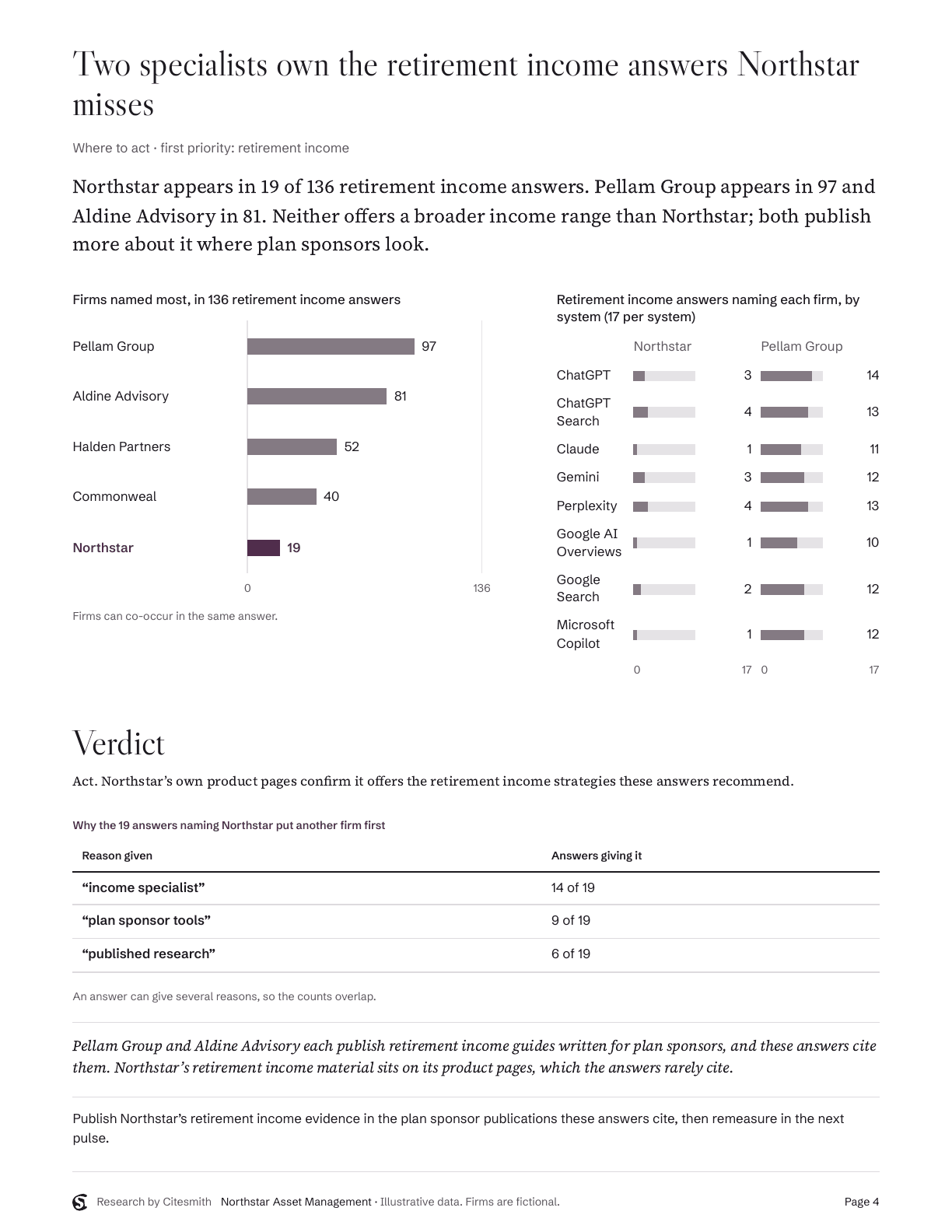
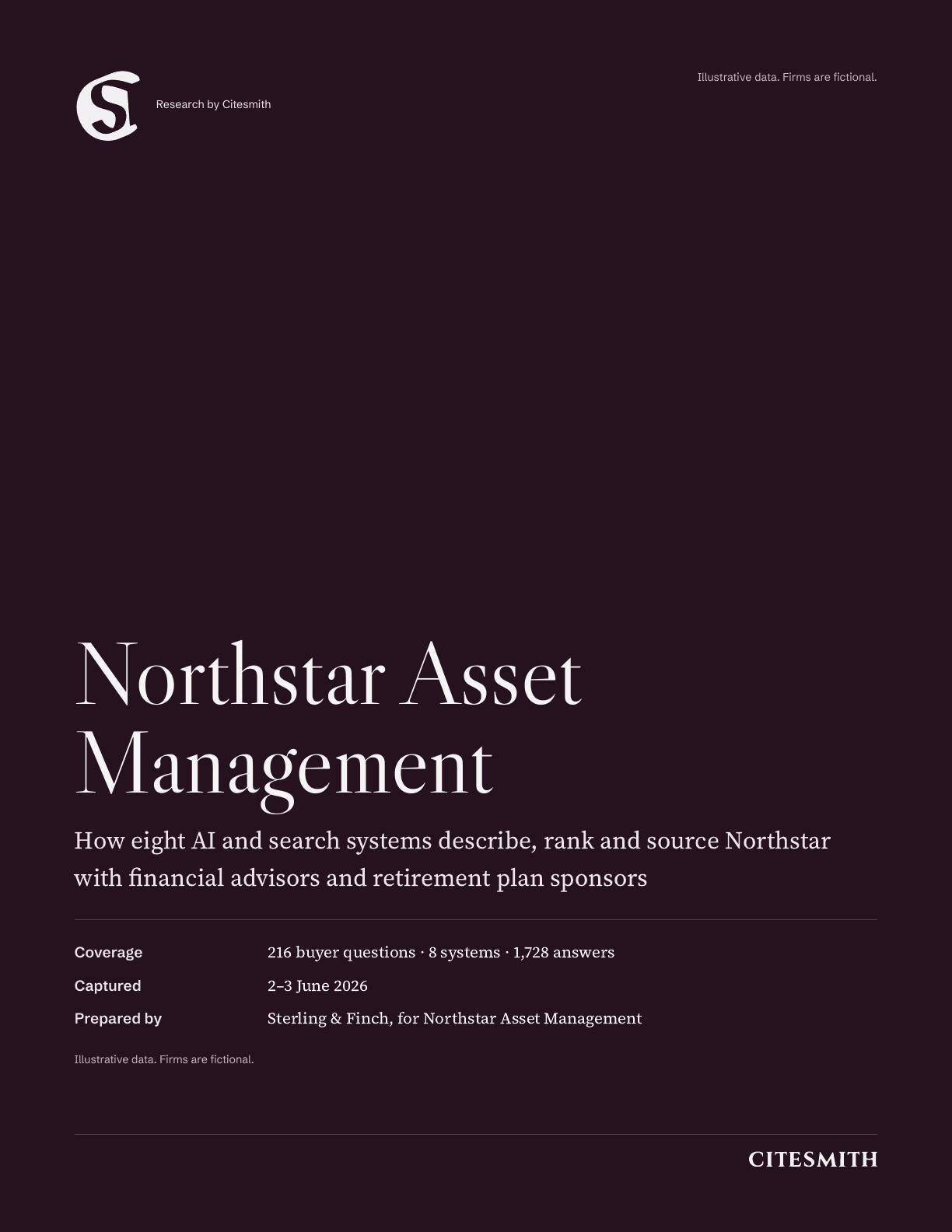
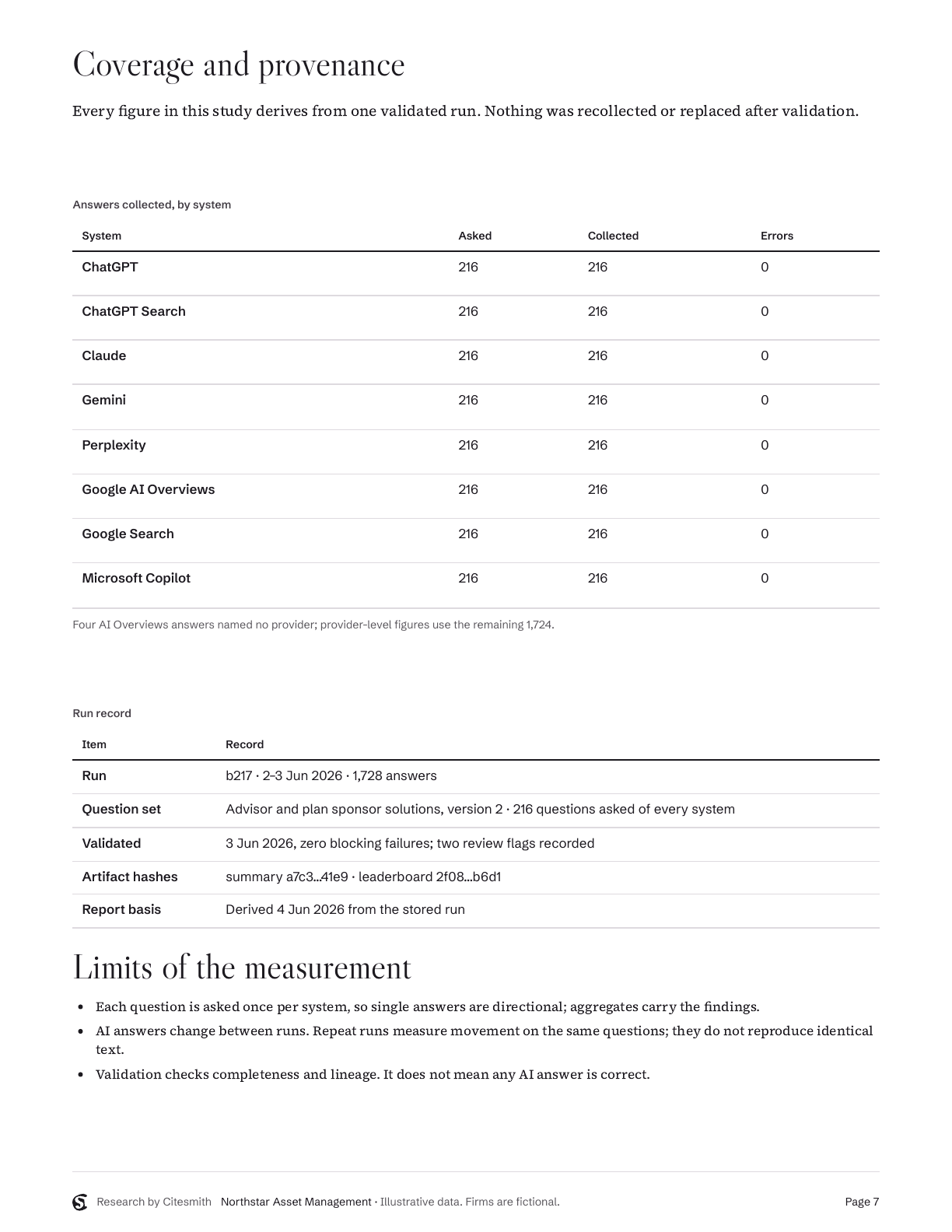
What the report looks like
Each finding keeps the evidence, limits and recommended action on the same page.
Win the AI recommendations that matter.
In a discovery session we walk through a finding like this one and scope your first study.